
Deep cut
Monday, October 26, 2026
The Wagner Free Institute of Science - a free science museum at 17th and Montgomery since 1865
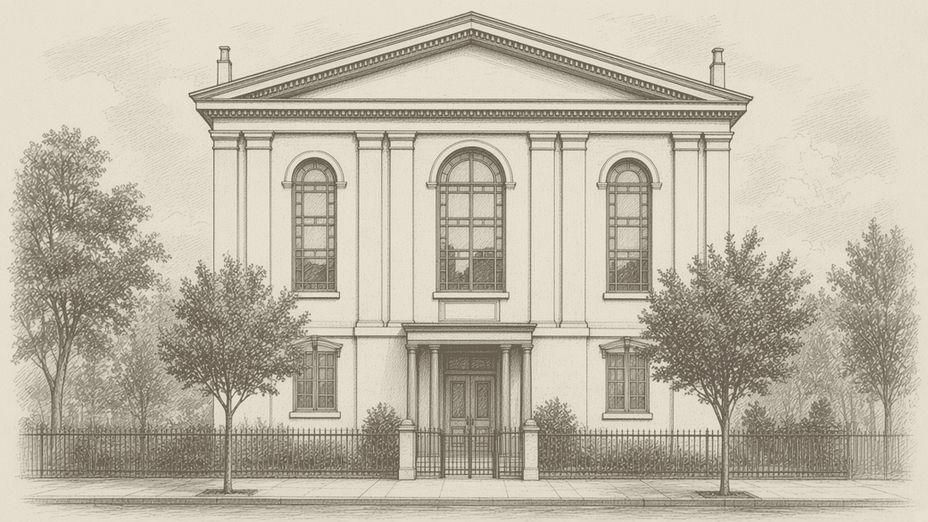
On Saturday, Nov 7, from noon to 4, the Wagner Free Institute of Science opens up for its November First Saturday. You can wander the museum, get your hands on specimens from the teaching collection and cast animal footprints.
On Saturday, Nov 7, from noon to 4, the Wagner Free Institute of Science opens up for its November First Saturday. You can wander the museum, get your hands on specimens from the teaching collection and cast animal footprints. That's a good enough reason to go. The better reason is upstairs, where the old glass-topped cases still stand in roughly the order a famous scientist put them in around 1890.
The building sits at 1700 W Montgomery Ave, a few blocks west of Broad and Temple. It has been teaching science to anyone who walks in, for free, from that corner since 1865.
The merchant and his cabinet
William Wagner was a Philadelphia merchant who collected natural history specimens for most of his life. As a young man he worked for the financier Stephen Girard, and his travels on Girard's business fed the collection. Both the Institute and its National Historic Landmark nomination tell it that way.
Back home he lived at Elm Grove, an estate on what was then the edge of the city. He started giving free science lectures there, using his own specimens to show people what he was talking about. The Landmark nomination dates the first lectures to 1847, and the Institute says the early 1850s, so I'm leaving the year out. Hidden City places Elm Grove along a long-gone diagonal road called Stump Lane, roughly between today's 17th and Berks and 15th and Cecil B. Moore. If that's right, the lectures started a short walk from where the building stands now.
From a borrowed hall to its own building
The talks got popular. By 1855 Wagner had moved them into Spring Garden Hall at 13th and Spring Garden, and the Institute was formally incorporated that year. The Institute says its faculty taught six evenings a week, that every class was free, and that women could attend along with men.
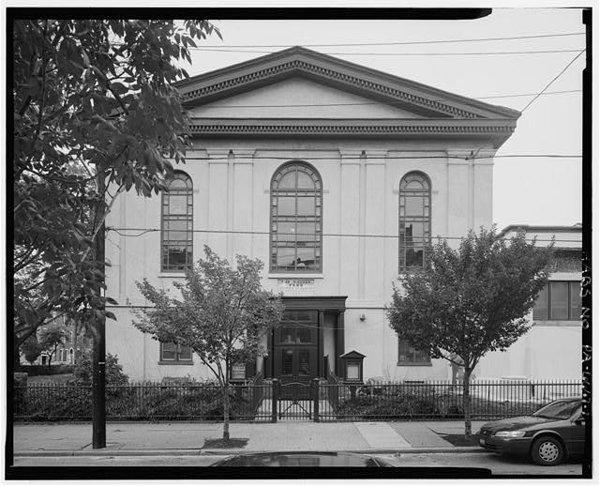
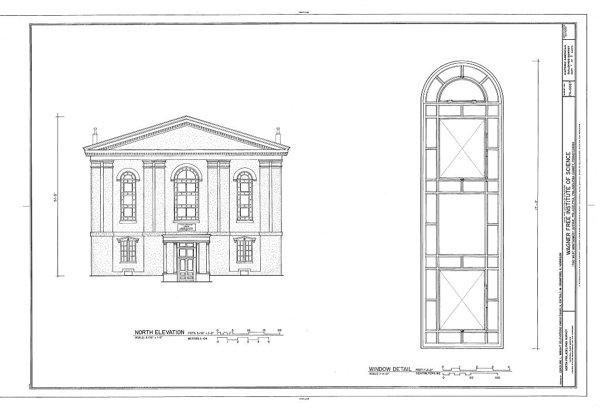
When the city wanted its hall back, Wagner planned a building of his own just south of his house, according to the nomination. Work started in 1859, and the Civil War pushed the opening to 1865. His architect was John McArthur Jr., the same man who later designed City Hall. The nomination says Wagner told McArthur to model the big lecture hall on the one in the brand-new Smithsonian. When the doors opened, the museum held more than 23,000 specimens. Wagner taught the mineralogy course himself.
Leidy's walk through time
Wagner died in 1885. The trustees hired Joseph Leidy to run the science side. Leidy was already one of the best-known naturalists in the country and taught anatomy at Penn, so landing him said a lot about how the Institute was regarded. He ran it until his death in 1891.
Leidy added real research to the teaching. He sent the Institute on its first field expeditions and published what they found in its own journal, the Transactions of the Wagner Free Institute of Science. The nomination says the biggest trip went to Florida's west coast and came back with a load of fossils.
His lasting change was the museum itself. Leidy reorganized the cases so a walk around the exhibit hall takes you from simple life to complex life and forward through geologic time. The Landmark nomination says the layout was meant to show Darwin's theory of evolution. The building got a five-year renovation and reopened in 1890, according to the nomination and Hidden City. When exactly the new display opened is muddier. The nomination says 1890 and the Institute says 1891. Either way it was done while Leidy was alive, and the Institute says little has been altered since.
That's why a visit feels the way it does. You're walking through a Victorian scientist's argument in the order he chose.
A library on the corner
In 1892 the Institute opened a public library inside the building. It was the first branch of the city's public library system, and the Institute, the nomination and Hidden City all agree on that. Philadelphia had two competing library systems for a few years. When they merged in 1895, the Wagner's branch became Branch No. 1 of the Free Library. It got so busy that in 1901 the Institute added a west wing just for the library, designed by the firm of Hewitt and Hewitt. The branch moved out decades later, and the sources disagree on the year, so I'll leave that one alone.
The Interior Department named the Wagner a National Historic Landmark in December 1990. The free classes are still running. This fall's evening course, "Meet the Beetles," runs Thursdays through Nov 5 at the Parkway Central Library, and the Institute says its upstairs hall holds over 100,000 specimens today.
Myth check
- "Wagner is buried in the building." You'll see this one around. The Landmark nomination says there's a crypt in the basement and that Wagner was buried there for one year before he was moved. So he was, briefly, and isn't now.
- "The first saber-tooth fossil." The nomination says the Florida trip turned up the first known fossil of a saber-tooth tiger. It's a great line with one source behind it, so I'm not printing it as fact.
- "The oldest free adult education program in the country." That's the Institute's own description of its courses. I couldn't find an independent check, so treat it as their claim.
- 1890 or 1891. The renovated building reopened in 1890. The Institute dates Leidy's finished display to 1891. Both are fair readings of the same few years.
Going now
- First Saturday: Sat Nov 7, noon to 4. The museum is free. Register on the Institute's Eventbrite if you can, but walk-ins are welcome.
- Regular hours: Tuesday through Friday, 9:30am to 4:30pm. Closed Nov 12-13 and Nov 25-27.
- Access: the museum is on the second floor, up a flight of stairs. Call ahead with access questions.
- Getting there: take the Broad Street Line local to Temple University/Cecil B. Moore and walk west, or take the Route 2 bus to 16th and Montgomery.
The short version
A merchant gave free science lectures in his house, built a hall for them in 1865, and the place is still giving them away. Go on a First Saturday, go upstairs and walk the cases in order.